
Las preventas de tickets son fundamentales para validar demanda y generar flujo de caja temprano, representando entre 40% y 70% de la capacidad total del evento en el mercado estadounidense. Para maximizar conversiones, necesitás una plataforma con checkout móvil rápido, dominio propio, integración directa con Stripe y analytics en tiempo real. Lo clave es crear beneficios tangibles comunicables, usar escasez real verificable y combinar múltiples canales de comunicación durante 7-14 días para mantener la urgencia.
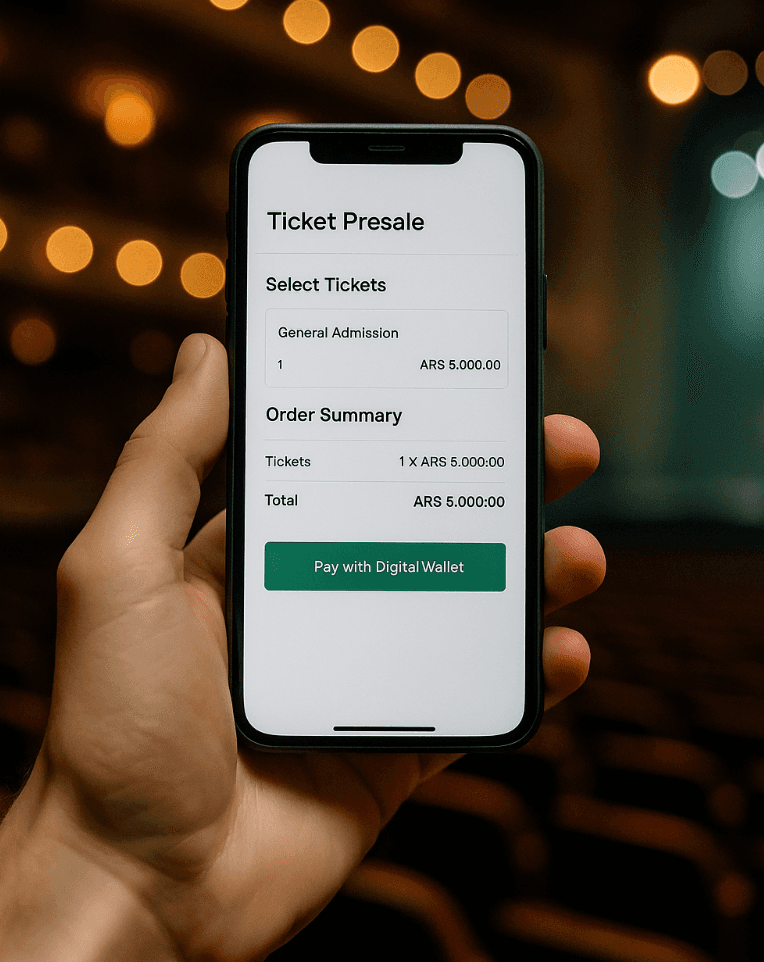
Ticket presales have become an essential tool for event organizers across the United States. They allow you to validate demand, generate early cash flow, and build community before event day. In this article, you'll understand exactly how ticket presales work, what technology you need to implement them correctly, and how to maximize their effectiveness in the US market.
What is a ticket presale and why is it key in the US
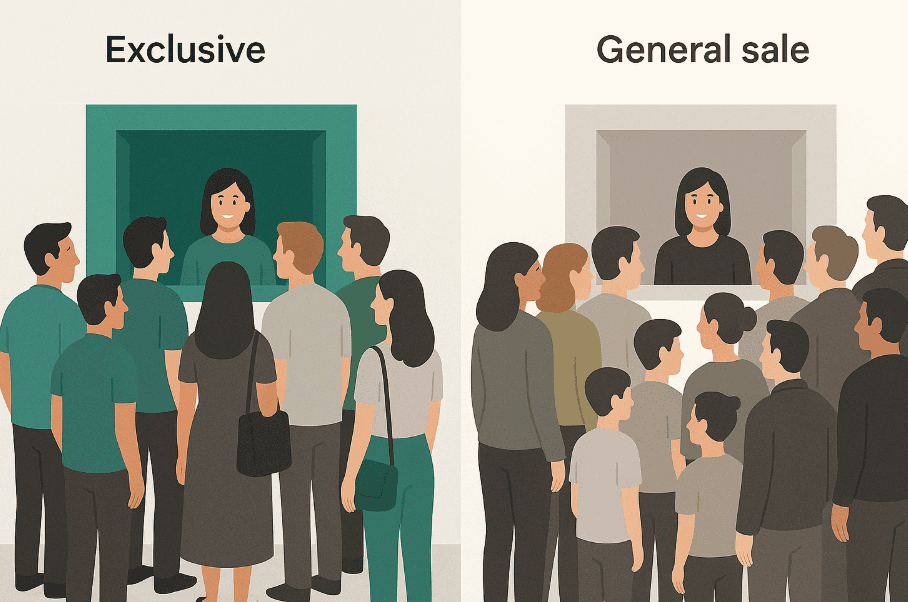
A ticket presale is a limited-time advance sale period that activates before general public access opens. During this phase, organizers offer priority access to tickets, typically with exclusive benefits like reduced prices, preferred seating, or additional perks.
In the US market, presales have particular characteristics tied to American consumer behavior. US buyers tend to plan their entertainment when they perceive differential value or scarcity. A well-executed presale can represent between 40% and 70% of total event capacity, especially for concerts, festivals like Coachella or SXSW, and culinary experiences.
Key difference from general sales:
Presale: limited timeframe, restricted quantities, exclusive benefits, urgency-driven communication
General sale: mass opening, wide availability, standard pricing, broad-reach communication
Presales also function as a market test. If you sell 50% of your capacity during presale, you confirm your offering has real traction. If response is lukewarm, you still have time to adjust messaging, pricing, or format before general sales.
How a ticket presale works step by step
Understanding how ticket presales work means knowing each stage of the process, from technical setup to transitioning to general sales.
Event setup and capacity allocation
The first step is defining your presale commercial structure. This includes:
Available ticket quantity: determine what percentage of your total capacity you'll allocate to presale (recommended: 30-50%)
Price differential: establish the economic or experience benefit that justifies advance purchase
Start and end dates: create a timeframe that generates urgency without oversaturating
Technical configuration should allow you to create specific quotas by ticket type. For example, at a festival you might have 200 early birds, 150 advance VIP tickets, and 100 two-day passes in presale, each with its own price and limit.
Activating presale link under your own domain
Once your event is configured, you need a sales link that reflects your brand. Instead of redirecting to a generic third-party site, modern platforms allow generating URLs under your own domain: yourevent.com/tickets instead of platform.com/generic-event-12345.
This builds immediate trust. US buyers value visual consistency and the feeling of purchasing directly from the organizer, not through an intermediary. Your own domain also improves search engine positioning and strengthens your digital identity.
Pre-launch communication (email, social, SMS)
Presale effectiveness depends directly on your communication strategy. The most successful US organizers combine multiple channels:
Email marketing: advance announcement to your contact base with countdown and preferential access
Instagram and social media: visual content that builds anticipation and shows concrete benefits of buying in presale
SMS marketing: direct messages to segmented communities with personalized links
Stories with countdown stickers: generate immediate visual urgency
Communication must answer three key questions: what the buyer gains by purchasing now, how much time they have to decide, and what happens if they don't buy during presale.
Buyer experience at checkout
When users click your presale link, they start a purchase process that must be quick and frictionless. US buyers abandon complex checkouts: each additional field increases abandonment rates.
The ideal flow includes:
Ticket selection: clear visualization of price, benefits, and availability
Minimal data: name, email, phone (only essentials)
Payment with Stripe, credit cards, or Apple Pay: the most trusted payment methods in the US, with various options
Immediate confirmation: success screen with instantly downloadable QR code
Automatic email: confirmation with QR code, event details, and reminder
This entire process should complete in under 60 seconds to maximize conversion.
Transition from presale to general sale
Presale closure requires strategic communication. Give 48-hour notice before the end with a last-chance reminder. When presale ends, open general sales with messages highlighting:
How many tickets remain available
New price (higher than presale)
Urgency feeling due to limited availability
Some organizers manage a brief pause between presale and general sale to build anticipation. Others make direct transitions. Both strategies work depending on event type and response received.
What a modern platform needs to handle presales without crashing

Successful presales in the US require solid technological infrastructure. The best-performing platforms share these fundamental characteristics:
Fast, mobile-first checkout: over 75% of ticket purchases in the US happen on mobile devices. Forms must load in under 2 seconds and complete without zooming or endless scrolling.
Own domain: your sales link should reflect your brand, not the platform's. This builds trust and improves conversion by 15-25% compared to generic links.
Direct integration with Stripe and payment processors: US buyers trust established payment methods. The platform should connect directly with your Stripe account, without intermediaries, so money reaches you immediately.
Instant automatic QR: as soon as payment confirms, buyers receive their QR code. No waiting, no emails going to spam. Digital tickets must be available instantly.
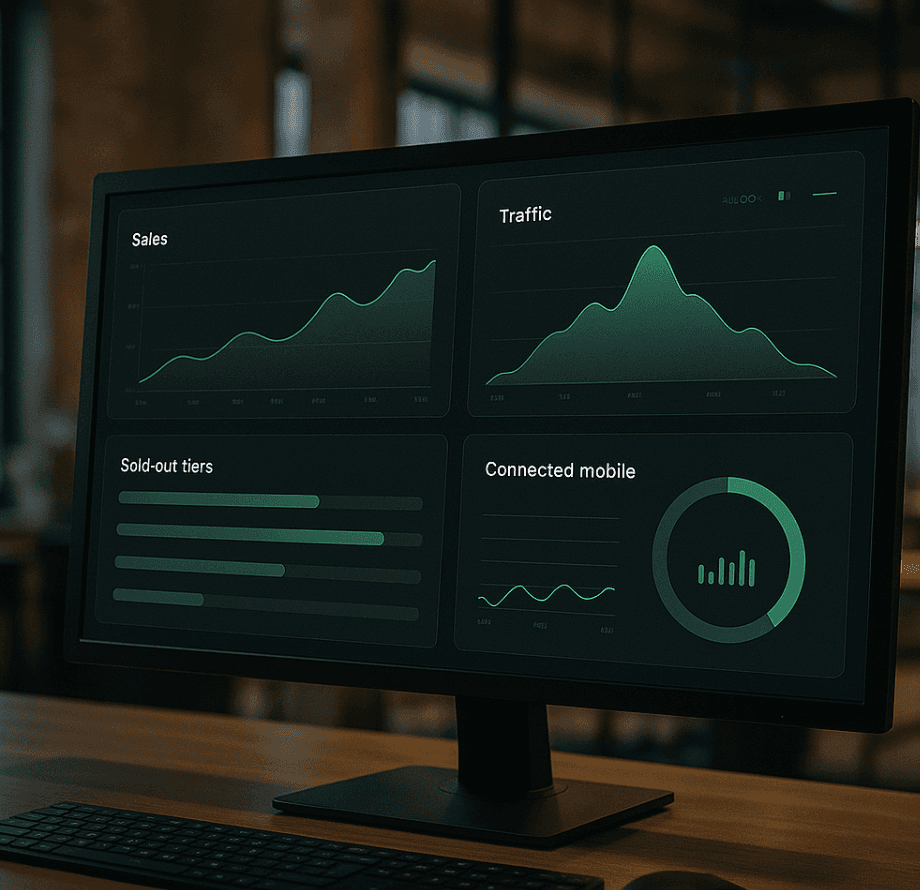
Real-time analytics: during presale you need to know how many tickets you've sold, what types, at what times, from which channels. Live data lets you adjust communication on the fly.
AI-powered remarketing: many users add tickets to cart but don't complete purchase. Modern systems detect these abandonments and activate automatic recovery campaigns via email or social media.
Automatic email marketing: confirmations, reminders, schedule changes. Everything should send automatically without manual intervention.
Best practices for higher presale conversions (US 2025)
These strategies work best in the current US market:
Create tangible, communicable benefits: "Tickets 30% cheaper" works better than "Special price." Be concrete about savings or exclusive benefits.
Use real scarcity: if you're offering 100 early birds, show the real-time counter. Americans respond strongly to visible, verifiable scarcity.
Segment your audience: don't speak the same way to your loyal base as to new followers. Repeat buyers value early access. Newcomers need more context about what your event is.
Enable payment plans: Credit card installments and payment options multiply conversion for high-ticket events. Communicate this clearly.
Activate social proof: show who already bought, how many tickets remain, brief testimonials from previous editions. Social validation accelerates decisions.
Optimize for mobile: check that every image, button, and text looks perfect on small screens. Most of your sales will come from phones.
Program automatic reminders: an email 48 hours before presale closure recovers 10-15% additional sales from people who had shown interest.
Common presale mistakes and how to avoid them
These problems most affect US organizers:
Mistake: Overly long presale. A 45-day presale loses urgency. Optimal is 7-14 days. If you need more time, structure in phases (early bird, second round, last chance).
Mistake: Unclear benefit. "Special price" communicates nothing. "Save $50 buying today" is concrete and actionable.
Mistake: Generic link that doesn't inspire trust. If your link is platform.com/ev/82746, you're losing conversion. Own domain generates up to 25% more sales.
Mistake: Checkout with more than 8 fields. Each additional data point you request increases abandonment. Ask only essentials: name, email, phone. Everything else can be optional.
Mistake: No live analytics. If you don't know how much you've sold so far, you can't adjust your communication. Real-time data is critical for optimizing on the go.
Mistake: Depending on one channel. If you only communicate through Instagram, you're limiting reach. Combine email, social, SMS, and remarketing to maximize impact.
Mistake: Not recovering abandoned carts. Between 40-60% of users who add tickets don't complete purchase. Without automatic remarketing, you're losing half your potential sales.
How to run a presale with Fanz
Fanz is a white-label ticketing platform that allows US organizers to manage presales under their own digital identity.
Event configuration: create your event in minutes, define ticket types, prices, quotas, and presale dates. You can configure different phases (early bird, second phase, last chance) with specific limits.
Link under own domain: generate a sales link that reflects your brand, not Fanz's. This maintains visual consistency and increases buyer trust.
Integration with Stripe: connect directly with your Stripe account. Money from each sale goes directly to you, without intermediaries or platform withholdings.
Optimized checkout: buyers complete purchase in under 60 seconds from any phone. Select tickets, complete minimal data, pay with Stripe/credit card/Apple Pay, and receive QR instantly.
Real-time analytics: from your dashboard, see how many tickets you've sold, what types, from which channels, at what times. All data updated live.
Automatic email marketing: system sends confirmations, reminders, and updates automatically. No manual work required.
AI remarketing: when someone abandons checkout without buying, the system activates automatic recovery campaigns to bring them back.
All this allows you to focus on creating a great event while technology handles ticket sales professionally and scalably.
Frequently asked questions about ticket presales in the US
How long should a ticket presale last?
Between 7 and 14 days is ideal to maintain urgency. If your event is very large, you can structure in phases: early bird (5 days), second round (7 days), last chance (3 days).
What percentage discount to offer in presale?
Between 20% and 40% works well in the US. What's important is that savings are communicable and significant: "Save $40" impacts more than "25% off".
How do ticket presales work if I don't have a contact base?
You can use social media advertising with precise targeting, influencer collaborations in your niche, or partnerships with brands that have your target audience. Presale also helps you build that base.
Is it better to do presale with fixed price or tiered early bird?
Tiered early bird (first 50 at $X, next 100 at $Y, last 150 at $Z) generates more urgency and rewards faster buyers. Works very well for high-demand events.
What if presale doesn't sell as expected?
You have time to adjust. You can extend dates, modify benefits, change communication strategy, or pivot the event format. Presale gives you this flexibility before committing to general sales.
¿Qué es un ticket presale y cuánto de la capacidad total puede representar en Argentina?
Un ticket presale es un período de venta anticipada por tiempo limitado que se activa antes de que se abra el acceso al público general. Durante esta fase, los organizadores ofrecen acceso prioritario a las entradas, típicamente con beneficios exclusivos como precios reducidos, asientos preferenciales o ventajas adicionales. Una preventa bien ejecutada puede representar entre el 40% y el 70% de la capacidad total del evento, especialmente para conciertos, festivales y experiencias gastronómicas. También funciona como test de mercado: si vendés el 50% de tu capacidad durante la preventa, confirmás que tu oferta tiene tracción real.
¿Cuánto tiempo debería durar una preventa de entradas para que sea efectiva?
Entre 7 y 14 días es lo ideal para mantener la urgencia. Una preventa de 45 días pierde urgencia, mientras que una muy corta no da tiempo suficiente para comunicar. Si tu evento es muy grande, podés estructurarla en fases: early bird (5 días), segunda ronda (7 días), última oportunidad (3 días). Si necesitás más tiempo, es mejor crear múltiples fases con diferentes precios y límites que una sola preventa extensa.
¿Qué porcentaje de descuento conviene ofrecer en una preventa de tickets?
Entre el 20% y el 40% funciona bien. Lo importante es que el ahorro sea comunicable y significativo: 'Ahorrá $40' impacta más que '25% de descuento'. Podés usar early bird escalonado (primeras 50 entradas a $X, siguientes 100 a $Y, últimas 150 a $Z) para generar más urgencia y recompensar a los compradores más rápidos. Esto funciona muy bien para eventos de alta demanda.
¿Qué características técnicas necesita una plataforma para manejar preventas sin colapsar?
Una plataforma moderna necesita checkout rápido y mobile-first que cargue en menos de 2 segundos, dominio propio para generar confianza, integración directa con Stripe y procesadores de pago, QR automático e instantáneo al confirmar el pago, analíticas en tiempo real para ajustar la comunicación sobre la marcha, remarketing potenciado por IA para recuperar carritos abandonados, y email marketing automático para confirmaciones y recordatorios sin intervención manual.
¿Cuáles son los errores más comunes en las preventas de entradas y cómo evitarlos?
Los errores más comunes son: preventa demasiado larga que pierde urgencia (optimal 7-14 días), beneficio poco claro como 'precio especial' en vez de 'ahorrá $50', link genérico que no inspira confianza en lugar de dominio propio, checkout con más de 8 campos que aumenta el abandono, no tener analíticas en vivo para ajustar comunicación, depender de un solo canal de comunicación, y no recuperar carritos abandonados cuando entre 40-60% de usuarios que agregan entradas no completan la compra.
¿Cómo funciona el proceso completo de una preventa paso a paso?
El proceso incluye: configuración del evento definiendo cantidad de entradas (30-50% de capacidad total), diferencial de precio y fechas; activación del link bajo dominio propio para generar confianza; comunicación pre-lanzamiento combinando email, redes sociales y SMS respondiendo qué gana el comprador, cuánto tiempo tiene y qué pasa si no compra; experiencia de compra con selección de entradas, datos mínimos, pago con Stripe/tarjetas/Apple Pay, confirmación inmediata y email automático; y transición a venta general con aviso 48 horas antes del cierre y comunicación del stock restante a precio más alto.
Tags